

Family Vacations in Toronto Archives - Page 10 of 14 - Delsuites' Blog
Browsing Category

Family Vacations in Toronto

Family Vacations in Toronto, Lifestyle talk, Relocation, Toronto Family Travel, Vacation Travel

5 Benefits of Travelling Light While on Business

June 3, 2015

Travelling LightAs the cost of travelling continues to rise (especially in air-travel), it becomes more essential to pack light and smart, especially if you are on a business trip and on-the-go. Whether you are staying with us for a short-term stay in our furnished apartments in Toronto, we’ve come up with five benefits of why travelling light will help you.

1. Travelling Light Saves You Time and Money When you only have one carry-on, you don’t have to pay the $25 + checked baggage fee nor do you have to wait at baggage claim for your carry-on (which reduces your time to transfer in destination). At check-in, you can also reduce your time in long lines by pre-checking your boarding pass and entering in your info at a kiosk rather than waiting to get your baggage tagged.Travelling Light While on Business

2. Lost Luggage Worries are Gone When you only have one bag or carry-on, you don’t have to worry about it getting lost, delayed, damaged (or worse, stolen). According to the L.A. Times, The total number of bags that were lost, delayed or damaged by airlines around the world were 22 million in 2013 (a 17% reduction from 2012 but there is still a long way to go).

3. Easy Navigation Within Big Cities In a large metropolis like Toronto, you can easily get to the airport via public transport. If you have a bigger bag or more than one bag, however, it will be a more difficult to navigate on a crowded bus or subway. Travelling light enables you to walk through busy train stations, airports, and downtown streets with ease. In many train stations, you also have to take the stairs, which is a simpler task than with a heavy bag or more than one bag/suitcase. Luckily, we do have complimentary airport transportation services as part of our services if you chose to stay with us.

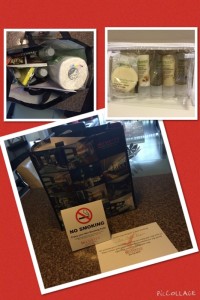
4. You Pack the Essentials PackiTravelling Lightng light forces you to decide which items are necessary for your trip in addition to simplifying your daily routine of figuring out what to wear each day. If you are traveling on business, choose neutrals to build a base. For instance a crisp white shirt which you can easily iron in your suite, a suit, and a black pair of shoes. You can tuck socks into your shoes to save room when packing and keep your toiletry kit to one simple bag either in the corner of your bag or in an easy to find-pocket of your luggage. (Remember: any liquids in your carry-on can be no more than 100 ml.) Packing smarter also enables you to find your things more quickly. A messenger back or lap-top bag is also efficient when you have to take it out during the customs and security check.

5. Flexibility If your flight or trip gets cancelled or delayed, you don’t have to worry about where your luggage is located. You also don’t have to worry about being able to navigate somewhere nearby because you packed light. For a business traveller, you can immediately take your belongings with you if you have to go straight to the office.

Packing light enables efficiency, cost-savings and flexibility. Do you pack light? What are your favourite benefits of packing light?

Business Travel, Family Vacations in Toronto, Lifestyle talk, Relocation

5 Misconceptions About Short-Term Condo Rentals Toronto

May 20, 2015

Moving InAs property development and construction in Toronto has increased so has the need for Short-Term Housing and Condominium Rentals. This concept is still relatively new and thus, there can be many misconceptions. We wanted to clear up the misconceptions and myths of short-term condo rentals Toronto and stays for a better understanding of the industry.

1. Short-Term Condo Rentals Toronto Minimum StaysShort-Term Condo Rentals Toronto
Though “short-term” can mean for less than a week or two in our lexicon, DelSuites minimum stay for their short-term stays are 30 nights. This may sound like a hefty amount for some but if you need a place to stay while you are settling in the city or on business, this minimum day stay will assure you you’ll have a place to call home away from home. Unlike a hotel, you can get to know your neighbours and you never have to move in and out in that 30 day period – lugging around your luggage if you are travelling to and from Toronto. You retain possession of the suite and can leave your luggage at home for the entire 30 nights.

2. Short-Term Condo Rentals Toronto are not Furnished
DelSuites apartments arShort-Term Condo Rentals Torontoe always fully furnished in modern furnishings and decor. Not only do you have your basic amenities but you also get the extras like kitchen appliances, plates, utensils, cleaning supplies, and more. You even have a start up supply of laundry and dish detergent for your en-suite laundry. As opposed to looking for a new apartment in the city and dealing with buying your own furniture or the hassle of a laundromat, DelSuites has you covered.

3. Short-Term Condo Rentals Toronto Don’t Come With the Extras
Though this may be true for some short-term condo rental companies, DelSuites has plenty of amenities. Concierge to help you with any of your needs? Check. Fitness Facilities? Check. Complimentary Wifi and Cable? Check. Grocery services from Real Food Toronto? Check. Airport Pick-up or Drop-Off Service? Check. Welcome Gift for every Child to help settle them in? Check. We’ve taken care of all of the details so you can arrive safe and relaxed.Short-Term Condo Rentals Toronto

4. Short Term Rentals are Not Clean or Well Maintained
We have a cleaning staff that come in once a week to ensure that your apartment or suite is spick and span. Unlike hotel cleaning staff when you don’t know when they’ll be coming on a daily basis, our staff are appointed a specific day to come in to clean from 9am to 5pm and can even work around your schedule.

5. Short Term Rental Costs
Though furnished apartments may seem costly for a short-term stay, when you factor in the costs (housekeeping, free wifi, laundry, a fully stocked kitchen, etc.), the costs can turn out to be less than staying in a hotel. Hotel rooms are usually just that – a room – so if you were to get a suite, a furnished apartment is better value. If you are in the midst of a relocation, DelSuites is a one-stop shop and less cost than aShort-term condo rentals Toronto consultant.

Have you ever stayed in a short-term rental? What was your experience and are these misconceptions true? What have you found to be misconceptions about short-term condominium rentals? Discuss! And if you ever have any questions, please contact us at 416.296.8838 or email us at info@delsuites.com

Downtown Toronto, Downtown Toronto Condos, Family Vacations in Toronto, Fitness and Health, Food & Recipes, Lifestyle talk

Tips to Healthy Eating in Your Furnished Suite

May 8, 2015

FamilyBeing healthy while travelling on the road whether for business or for leisure can be a difficult task to upkeep. Luckily, the kitchens at the furnished apartments at DelSuites gives you the resources to eat as healthy as possible while you’re in Toronto for your trip. Here are a few of our tips to healthy eating, whether you’re in the city for a short-term or long-term stay.

1. Buy Locally from Farmers Markets. Shopping at the farmers markets ensures that your produces is locally sourced. Locally sourced produce means it’s fresh and that you’re getting the best quality and nutrients in your meals as opposed to the exported product found in grocery storTips to Healthy Eatinges (most produce, as a result, will be processed). While in another city, like Toronto, going to the farmers markets will keep you in the company of locals and chat up the local farmers and producers of your food. There are a number of farmers markets that are in the areas of our properties from downtown to Etobicoke and Mississauga.

2. Buy in Season. As above, the food you buy at the farmers’ markets is seasonal. That said, if you are at a market or at the grocery store near your furnished rental in Toronto, buying in season will ensure your produce is as healthy as possible. Asparagus and Rhubarb are prime in the spring; corn is perfect in the summer months; tomatoes are at its peak in September; and apples and pumpkins are ripe and ready in the fall. Buying in season also helps you connect with the earth and weather as it changes throughout the year.

3. Get your Groceries Delivered If you are on business while in Toronto and on the go, having no time to shop can result in unhealthy eating. Luckily, one of our services is grocery delivery via Real Food Toronto. This way you can plan your meals to keep your meals fresh and delicious if you can’t get to the farmers markets. Real Food Toronto prides itself on its selection of healthy options for its customers.

4. Broil and Bake instead of Fry. Our fully stocked kitchens come with state of the art ovens, pots, and pans for all of your cooking and baking needs. Cooking instead of going to restaurants will also keep you healthy on the road and with our amenities, there’s no excuse not to cook in your apartment! Whether you get your Tips to Healthy Eatinggroceries from a local grocery store (many grocery stores are conveniently located near our properties), or at the farmers market, try to broil or bake your fish or meat instead of frying it, as it will save you from added calories or additives in your meals.

5. Eat at a Table. Having a place to sit away from a desk or taking the time out in the morning to enjoy a healthy breakfast will keep you satiated and less likely to induce in cravings later on in the day as well as giving you that peace of mind and time for yourself before a busy day in the city or while on business.

What are your favourite tips to healthy eating?

Business Travel, Downtown Toronto, Entertainment, Events, Family Vacations in Toronto, Lifestyle talk

Things You Should Know About Living in Toronto

April 17, 2015

Living in TorontoToronto is a great city in which to live (welcome!) and according to the Global Liveability Report (2014), Toronto has been recognized as being one of the five most liveable cities in the world. We have a rising economy, a good mix of nature along the edges of our downtown core, a good standard of living, and are one of the most multicultural-friendly cities in the world. However, as with other major urban centres, Toronto has its quirks that you have to navigate as a resident. Talking to our team is a good start to help you learn more about Toronto living. Here’s our guide to what you should know about living in Toronto.

1. Harsh Winters and Hot Summers
What you hear about Toronto’s winters are true: they can be extremely cold. Lately, however, temperatures fluctuate. One day the temperature can be a balmy 10 degrees celsius; another day, they can drop to minus 25 degrees celsius. Dressing in layers is crucial when living in Toronto. Equally, summers can be hot and humid and downtown smog permeates the air in the downtown core. Another reminder to keep your umbrella handy as Toronto’s rainfall has increased in the past few years. Having a humidifier or air purifier will keep the air fresh in your furnished apartment in Toronto.

Living in Toronto

2. Transportation
Other than driving, there are a few ways to get around the city, a very large one at that, and depending on where you go, it’s an average of 30 minutes to get anywhere in the city. The Toronto Transit Commission, also known as the TTC, is one of the most central ways to get around the large metropolis. It extends from Scarborough to Etobicoke (east to west) and Finch/Steeles to Union Station at Front Street (north to south). An average fare on the TTC is $3.00. If you’re looking for a quicker alternative, you can take a taxi in the city, with a starting rate at $4.50. Cabs in Toronto can be notoriously expensive so be careful. An average ride from outside the downtown core can cost $20 to $25. Uber or Uber X is also another alternative. If you are traveling to the suburbs such as Markham, Mississauga, or Brampton, the GO Transit system (via bus or train) will help you get there efficiently if you don’t drive. Prices vary based on your destination; however, an average price to Mississauga one way is $7.Living in Toronto

3. Rush Hour
Rush hour in Toronto lasts from 6:30am to 9:30am during morning weekdays and around 4:00pm to 6:30pm during weekday evenings. It is at its peak during 8am and 5 to 6pm, respectively. Traffic congestion is one of the major issues as Toronto has expanded. If you live downtown or near your workplace in one of our central locations, the best alternative is to walk or bike to work to avoid the crowds altogether. On the TTC, do expect to wait one or two trains, especially on the Yonge/University line due to congestion. Union Station is also in a state of significant transformation with new exits so give yourself time to navigate in the morning. Alternatively, you can commute in less peak hours to give yourself plenty of time to reach your destination.

Living in Toronto

4. Construction
Toronto continues to expand significantly as it has done so over the past 10 to 15 years. Over 100,000 condominium units are currently being constructed (source) and according to a report in the Toronto Star, our metropolis is home to more than 44 high rises exceeding 150 metres. As the city gears up for the Pan Am Games, you’ll see a lot of delays on major routes, the main one being the Lakeshore between Yonge and Spadina, which is slowly but surely improving in terms of development. Always map out your route and double check the TTC website before you travel anywhere in the city if you don’t know it well. Downtown, it may be easier to walk certain places than it is to take the TTC.

Living in Toronto

5. A City of Neighbourhoods
Toronto is known as a city of neighbourhoods (complete with our own toques!) and the best part of this city is feeling like you’re constantly a tourist, whether it’s trying a new, ethnic restaurant or going to a cultural event. If you like to be near the water, The Beaches, Scarborough Bluffs, or Lakeshore West might be good options for you. Downtown, you are close to the funkiest areas complete with shopping, restaurants and nightlife downtown or by Queen, King, or Kensington Market. Yorkville and Rosedale/Summerhill are a bit more lush. North York is right by the subway line with plenty of parks and dining options. For those wanting more family-friendly neighbourhoods, Roncesvalles, High Park, The Danforth, and Leslieville are great options.

Living in Toronto

6. It Can Be Difficult to Meet People
Living in a big and constantly changing urban centre like Toronto can make it difficult to meet people. The best solution to this urban issue is to join a club. There are plenty of interesting clubs out there depending on your interest. The Toronto Sport and Social Club is a great addition to your workout routine, or you could join a quirky club like an axe throwing league (yes, that exists!). Volunteering is another way to meet new friends while giving back to the community. Sites like Charity Village can help you find what interests you. Likely, there is a club for whatever your interest happens to be.

Of course, do check out any events happening where you can meet other residents in your DelSuites condo.

A big city like Toronto can take a bit of getting used to but once you settle into the city (and your short term rental in Toronto, which will make life a bit easier for you), you’ll find yourself calling it home sooner than later. Just make sure you pronounce it “Toronna” and not “Tore-on-tow.”

Business Travel, Family Vacations in Toronto, Toronto Family Travel, Vacation Travel

10 Things You can Carry on a Plane

March 27, 2015

Things you can Carry on a Plane Since 9/11, travel has gotten much more restrictive but it doesn’t mean that that are there aren’t certain things that you still can’t bring on a plane. The Canadian Air Transport Security Authority (CATSCA) is the official source of what items to carry on a plane. Some are a bit quirky. Others are a bit more practical. When you are traveling, here are our top picks of things you can carry on a plane.

1. Axes. Looks like that Battle Axe League in Toronto is really taking off!
2. Breast Milk. Passengers flying with or without their child will be permitted to bring breast milk in quantities greater than 100 ml provided it is presented to the Screening Officer for inspection prior to screening. Gel or ice packs are also permitted.
3. Corkscrews. Without the attached knife, your corkscrew is permitted on your carry-on or checked luggage. Things you can Carry on a PlaneYour swiss army knife will likely be confiscated.

4. Cremated Remains. Cremated remains in a container may be packed as part of your carry-on baggage. The container, however, must pass separately through the x-ray machine. For more information, please check the special procedures in place for screening cremated remains.
5. Razor Blades and blade cartridges. Razor blades that are encased in their plastic holders (disposable razors and razor blade cartridges) are permitted in carry-on baggage.
6. Ink/Toner Cartridges. You can carry-on but surprisingly, not check ink or toner cartridges in your baggage. Note: Ink cartridges things you can carry on a planewith a capacity of 17.6 oz. (500 g.) or more are not permitted in checked baggage for all flights – domestic, U.S. and international.
7. Juice for babies and baby food. Other things you can carry on a plane are baby formula, food, juice, water and other baby items – these are allowed in your carry-on baggage or personal items. You can take these through the security checkpoints and aboard your plane. However, you must be travelling with an infant under two years of age (0-24 months). You may bring gel or ice packs to keep your baby products cool. All items including formula must be presented to the Screening Officer and will be inspected.
8. Non-prescription medication. These items are considered to be essential non-prescription medications. You are allowed to carry volumes greater than 100 ml (3.4 oz.) in your carry-on baggage. These liquids must be declared to the Screening Officer separately. Documentation to support your medical needs or condition is not required; however, if you feel that it would help ease your screening, it should be presented to the screening officer along with your medically necessary items.
9. Protein Powder
10. Syringes. Must be for personal medical use, and the needle guard must be in place. The person must possess medication that is to be administered by means of the syringe or needle and biojectors. To facilitate screening, CATSA recommends that the medication be properly labelled (professionally printed label identifying the medication or a manufacturer’s name or pharmaceutical label – For more information, click here.

What are your essential items for carrying on a plane?